
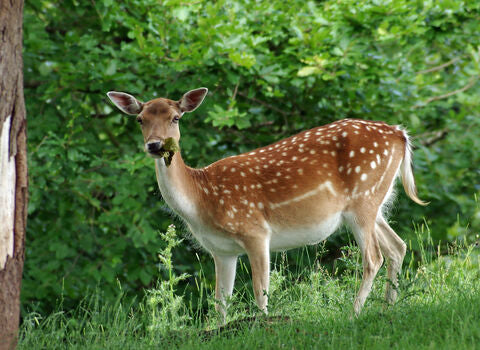
The Quiet Crisis in the Coverts
Britain's deer population is out of control. The damage is mounting — and without urgent action from the field sports community, the countryside as we know it will pay a heavy price.
Nobody knows how many deer live in Britain. Two million is the figure most commonly cited; those who study the question will tell you it is, at best, an educated guess. What is beyond dispute is that the number is rising sharply, and that the countryside is absorbing consequences that most people never see.
Deer cause up to 74,000 road accidents a year. They suppress crop yields, overwhelm young woodland, and systematically dismantle the habitat that sustains some of Britain's most vulnerable wildlife. By 2021, a third of British woodlands showed active signs of deer damage, against just 12 per cent fifty years earlier. The slow disappearance of dormice, nightingales and turtledoves from landscapes where they once thrived is, in no small part, a deer story. The government's own recently published policy paper on the subject reaches a stark conclusion: "It's clear that the management approach to date has failed."
Six species now graze Britain's fields and forests, each browsing at a different height, each with its own dietary preferences, collectively stripping woodland of its natural regeneration with a thoroughness that undoes decades of careful habitat management. The problem has been compounding quietly since at least the 1970s, when milder winters and longer growing seasons began tilting conditions firmly in the deer's favour. The Covid pandemic — keeping stalkers at home for two critical years — accelerated what was already a chronic failure of management.
The diagnosis is straightforward: around 350,000 deer are culled in Britain each year, and that figure needs to double. The obstacles to achieving it are less straightforward. Deer stalking is a demanding discipline, and a contracting one — the average age of a registered stalker has risen from 58 to 62 in just two years. Britain lacks the venison-eating culture of much of continental Europe, which means the commercial incentive to cull at scale has never developed. And perversely, overpopulation benefits hunting estates directly: a mature stag can add £50,000 to a property's value, creating a financial logic that runs precisely counter to sound land management.
Exclusion fencing and contraceptive programmes offer partial, localised relief but cannot address population levels at scale. Wolf reintroduction — however appealing to the rewilding lobby — would require numbers that no available landscape could support.
What is needed is political will, and that is in notably short supply. Too many local and national politicians represent constituencies with little direct experience of the countryside, and arrive at the subject — if they arrive at it at all — through the lens of the hunting debate rather than the land management one. For those whose understanding of deer stalking begins and ends with opposition to field sports, the instinct is to restrict rather than to reform, to conflate culling with cruelty rather than to recognise it as the only workable tool available. The result is a policy environment that is easily distracted from the ecological emergency by arguments about how that emergency should be addressed. The damage accumulates in the meantime.
It falls, therefore, to those who know the land to make the case plainly and persistently — to their MPs, their local councils, and to anyone with the power to shape the framework within which deer management operates. The field sports community has always been the countryside's most committed steward. That stewardship now demands something beyond the field: a willingness to engage the political argument, on its own terms, before the window to act closes. The deer are not the problem. The absence of management is. And the longer that absence continues, the quieter the coverts will become — not with the stillness of an early morning, but with the silence of a landscape that has lost the diversity it once held.
Wagstaff Watches is made for those who read the land as fluently as the clock. Now with 35% of our production assembled in Britain, for those who know what it means to take care of things that matter.
Wagstaff Watches proudly partnered with and featured in






Comments (0)
There are no comments for this article. Be the first one to leave a message!